

How We Can Help?
We can assist you with connecting to hospitals and hotels in China, issuing medical travel certificates, planning your medical itinerary in China, estimating the overall cost, and providing any other services you may need. If you have any requirements in this regard, please get in touch with us!
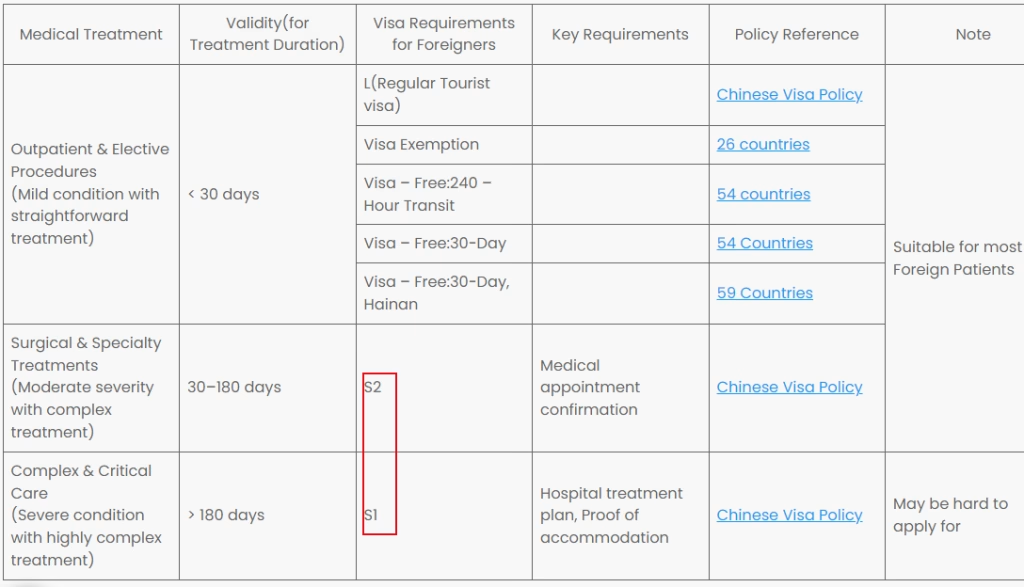
Please refer to: A Comprehensive China’s Visa Application Guide: What kind of visa should I need for medical tourism in China?
Generally, international patients seeking medical treatment in China should obtain below visa types:
- an L visa (regular tourist visa), visa-free or visa-exemption for relatively simple treatments or healthcare duration <30 days
- an S2 / S1 visa (depending on the complexity of their medical conditions) for complex treatments or healthcare duration > 30 days.
It is recommended that you select an appropriate visa type for entering China based on your own medical condition and visa situation.
This article will focus on how to apply for S1 / S2 visa for complex treatments or healthcare types for international patients.
Understanding the China Medical Visa (S2/S1 Visa)
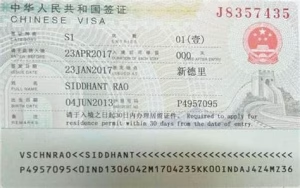
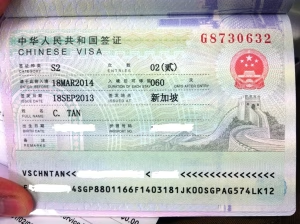
The China Medical Visa, often referred to as the S2/S1 Visa when utilized for medical purposes, is specifically designed for individuals traveling to China for medical treatment. This visa category caters to a growing need, as China’s healthcare sector becomes increasingly accessible and attractive to international patients seeking specialized treatments, advanced medical technologies, and cost-effective healthcare solutions. Before embarking on the application process, it’s crucial to understand the specific requirements and documentation needed to ensure a smooth and successful visa application. This comprehensive guide will walk you through each step, providing clarity and helpful tips along the way.
S1 Visa (Long-term Private Affairs)
- Applicable Persons:
- Foreign patients requiring long-term treatment in China (exceeding 180 days).
- Accompanying family members (limited to spouse, parents, children under 18 years old, and parents of the spouse).
- Key Features:
- Stay exceeds 180 days; a residence permit (up to 5 years) must be obtained within 30 days of entry.
- Required Documents:
- Critical illness notification or long-term treatment certificate from a Grade A, Level 3 hospital in China (e.g., cancer treatment, organ transplantation).
- Bank statement showing sufficient funds to cover medical expenses during the stay in China (recommended to cover 120% of estimated costs).
- Proof of kinship between the patient and accompanying family members (e.g., birth certificate, marriage certificate).
- Invitation letter from a foreigner residing in China (if the patient is not applying independently).
S2 Visa (Short-term Private Affairs)
- Applicable Persons:
- Foreign patients requiring short-term treatment in China (not exceeding 180 days).
- Accompanying family members (broader range: spouse, children, parents, grandparents, siblings, etc.).
- Key Features:
- Single stay limited to 180 days; cannot be directly converted to a residence permit.
- Visa is annotated with “treatment” to clarify the purpose of medical care.
- Required Documents:
- Medical diagnosis certificate or critical illness notification from a Grade A, Level 3 hospital in China.
- Bank statement showing sufficient funds to cover medical expenses during the stay in China (recommended to cover 120% of estimated costs).
- Proof of kinship or a medical institution’s certificate of accompaniment for accompanying family members.
- Explanation of urgent humanitarian reasons (e.g., attending a funeral, visiting a critically ill patient).
Medical Certificates from Chinese Hospitals
All medical certificates must be issued by Grade A, Level 3 hospitals or designated institutions in China (e.g., Ruijin Hospital in Shanghai, Peking Union Medical College Hospital in Beijing). Certificates must be in Chinese or accompanied by an official translation and stamped with the hospital’s seal.
Please check here to get some China’s top-tier Grade A, Level 3 hospitals.
Obtaining Medical Certificates Before Entry
Foreign patients can obtain medical certificates from Chinese hospitals remotely through the following process:
- Confirm Hospital’s Remote Services: Patients or their agents must first confirm whether the target hospital offers remote diagnosis and certificate issuance services and understand the relevant policies and procedures.
- Contact Hospital Staff: Reach out to hospital staff through channels such as the hospital’s international medical department or remote medical platform customer service to inquire about the specific requirements and steps for obtaining a remote medical certificate.
- Submit Required Materials: Patients need to complete application forms and submit personal identification, medical records, test reports, and other materials required by the hospital to allow doctors to fully understand the condition.
- Remote Consultation: The hospital arranges for doctors to conduct remote video consultations or online consultations with the patient, and the doctors make a diagnosis based on the patient’s description of their condition and medical records.
- Issue Medical Certificate: If the doctor determines that the patient meets the criteria for issuing a certificate after remote diagnosis, the hospital will issue a medical certificate following the prescribed procedures and stamp it with the hospital’s seal.
Key Comparison of S1/S2 Summary
| Item | S1 Visa | S2 Visa |
|---|---|---|
| Purpose | Long-term treatment (>180 days) and accompaniment | Short-term treatment (≤180 days) and accompaniment |
| Stay Duration | Requires conversion to a residence permit (up to 5 years) | Single stay ≤180 days, cannot be converted to residence |
| Accompanying Family Members | Spouse, parents, minor children, etc. | All immediate and extended family members |
| Core Documents | Long-term treatment certificate + proof of kinship | Short-term treatment certificate + certificate of accompaniment |
| Annotation Requirements | No special annotation | Annotated with “treatment” |
Visa Selection for Medical Treatment Scenarios
- Long-term Treatment (e.g., over 6 months, chronic diseases, or complex surgeries/illnesses)
Patients and their immediate family members should primarily choose the S1 visa.
Requirements: Need to apply for a residence permit in China, provide a long-term treatment plan, a hospital guarantee letter, and proof of kinship (if there are accompanying family members).
Note: S1 visa holders must apply for a residence permit at the public security authorities within 30 days of entry; otherwise, they may face fines.
- Short-term Treatment (e.g., 1-3 months, non-complex surgeries/illnesses)
Patients and their accompanying family members should primarily choose the S2 visa (annotated with “treatment”).
Requirements: Need to provide a hospital invitation letter, a diagnosis certificate, and a bank statement showing over US$10,000 (to prove financial capability).
Example: A foreign patient planning to undergo heart surgery at a hospital in Shanghai needs to apply for an S2 visa (annotated with “treatment”) and submit a surgery appointment, a medical certificate from the hospital, and a bank statement.
Note: S2 visa holders cannot directly convert to long-term residence in China. If they need to extend their treatment, they must leave the country and reapply for an S1 or Q1 visa.
Step 1: Assess Your Eligibility and Needs
Before you start the application, determine if the S2/S1 Visa is indeed the correct visa type for your situation. The S2/S1 Visa is primarily intended for medical treatment. If you are traveling for a medical check-up, consultation, or a specific treatment plan, then the S2/S1 Visa is appropriate. However, if your trip is also related to business, leisure, or other purposes, you might need to explore other visa options in conjunction with the S2/S1 Visa or consider a different visa altogether. Carefully evaluate your itinerary and purpose of travel to ensure you’re applying for the correct visa category. Furthermore, determine the length of stay required for your treatment. The validity of your visa must adequately cover the entire duration of your medical procedures, recovery period, and any follow-up appointments.
Step 2: Gather Required Documents
This is the most crucial step. Having all the necessary documents in order can significantly expedite the visa application process. Here’s a detailed list of documents you will likely need:
- Original Passport: Your passport must be valid for at least six months beyond your intended stay in China and have at least one blank visa page.
- Visa Application Form: You can download the visa application form from the official website of the Chinese Embassy or Consulate in your country. Fill out the form accurately and completely.
- Passport Photos: Recent passport-sized photos that meet the specific requirements outlined by the Chinese Embassy or Consulate (usually a white background).
- Proof of Medical Condition: A letter from your doctor or medical professional in your home country outlining your medical condition, the type of treatment required, and why it is necessary for you to seek treatment in China. This letter should be officially translated into Chinese.
- Invitation Letter from a Chinese Hospital or Medical Institution: This is a critical document. The invitation letter must come from a reputable and licensed hospital or medical institution in China. It should specify the type of treatment you will receive, the duration of your stay, the cost of treatment, and contact information for the hospital. Ensure the letter is on official hospital letterhead, stamped, and signed by an authorized representative.
- Proof of Accommodation: Provide evidence of where you will be staying during your treatment period. This could be a hotel reservation, a lease agreement for an apartment, or a letter of invitation from a host in China.
- Financial Proof: Demonstrate that you have sufficient funds to cover your medical expenses, accommodation, and living expenses during your stay in China. This can be in the form of bank statements, credit card statements, or a letter from a sponsor guaranteeing financial support.
- Travel Itinerary: Include a copy of your flight booking (round-trip or onward ticket) and a detailed itinerary outlining your planned activities in China.
- Other Supporting Documents: Depending on your specific situation, you may be required to provide additional documents, such as previous Chinese visas, proof of insurance, or a criminal record check. It’s always best to check with the Chinese Embassy or Consulate for any specific requirements.
Step 3: Submit Your Application
Once you have gathered all the required documents, you can submit your visa application to the Chinese Embassy or Consulate in your country. You may need to schedule an appointment in advance. The application process may vary slightly depending on the country. You can typically submit your application in person, through a visa application center, or by mail (in some cases). Be prepared to pay the visa application fee, which varies depending on your nationality and the type of visa. Ensure you pay the fee using the accepted payment methods. During the application process, you may be asked to attend an interview. Dress professionally and answer the questions honestly and concisely. Be prepared to discuss your medical condition, treatment plan, and financial resources.
Step 4: Await Processing and Collect Your Visa
The processing time for a China visa can vary from a few days to several weeks. You can usually track the status of your application online. Once your visa is approved, you will be notified to collect your passport. Carefully review your visa to ensure all the information is accurate, including your name, passport number, visa type, and validity dates. Make a copy of your visa and keep it separate from your passport in case of loss or theft. Before traveling to China, register your trip with your country’s embassy or consulate in China. This will allow them to contact you in case of an emergency.
Tips for a Smooth Application Process
- Start Early: Begin the application process well in advance of your planned travel dates to allow ample time for processing.
- Be Organized: Keep all your documents organized and easily accessible.
- Be Accurate: Fill out the application form accurately and honestly.
- Seek Assistance: If you have any questions or concerns, contact the Chinese Embassy or Consulate for clarification.
- Translate Documents: Ensure all non-English documents are officially translated into Chinese.
- Double-Check Requirements: Verify the specific requirements for your country with the Chinese Embassy or Consulate.
- Keep Copies: Make copies of all your important documents.
- Be Patient: The visa application process can take time, so be patient and follow up if needed.
Validity Period Range
- Single/Multiple Entries: The validity period generally ranges from 3 months to 5 years, subject to the approval of the consular officer based on the specific business activity requirements (such as contract duration or content of the invitation letter).
- Common Cases:
- First-time applicants are usually granted a multiple-entry visa valid for 6 months to 1 year.
- Those with a good record of visiting China (e.g., multiple entries with an S1 Visa within 5 years) may apply for a multiple-entry visa valid for 2 to 5 years.
Difference Between Validity and Duration of Stay:
- Validity: Refers to the period during which the visa can be used for entry (e.g., “January 1, 2025, to December 31, 2025”).
- Duration of Stay: Refers to the length of time allowed to stay in China after each entry (usually 30 to 180 days), and one must depart within the “days of stay” indicated on the visa.
Extension and Precautions:
If an extension of the stay is needed, an application can be made to the public security authorities within 7 days before the end of the stay period, but the cumulative extension period shall not exceed the original duration of stay indicated on the visa.
For example, if entering with an S2 Visa with a 90-day duration of stay, the maximum extension allowed is 90 days (total stay of 180 days).
Conclusion
Obtaining a China Medical Visa requires careful planning and attention to detail. By following this step-by-step guide and preparing all the necessary documents, you can increase your chances of a successful application and access the medical treatment you need in China. Remember to stay informed, seek assistance when needed, and be patient throughout the process. With proper preparation, you can navigate the visa application process with confidence and focus on your health and well-being.
Suggestion
Check the latest policies through Chinese embassies or consulates abroad or the official website of the National Immigration Administration.
Additional Resources:
- China’s Visa & Entry
- Best Diseases to Treat in China: Dental, Cancer, IVF & More for International Medical Tourists
- Why Choose China for Medical Tourism Destination for international medical seekers?
