For anyone considering medical tourism in China, understanding hospitalization guidelines is key to a smooth experience. This page covers everything from admission procedures to insurance coordination, ensuring you’re fully prepared for your treatment journey.
- International patients may face challenges in China—visas, hospital selection, payments, insurance, and language. For a smoother medical journey, here are key tips from us.
- Should you have more questions or need customized services, please feel free to Contact US, we will reply to you ASAP.
Navigating medical tourism in China can be straightforward with the right preparation. By following these hospitalization guidelines, international patients can focus on their recovery while enjoying the benefits of high-quality, affordable care. Our team at MedChinaGuide is here to support you through every stage, from pre-admission to post-treatment follow-up, making your medical journey in China as seamless as possible.
1. User Guide for Our Platform (3)
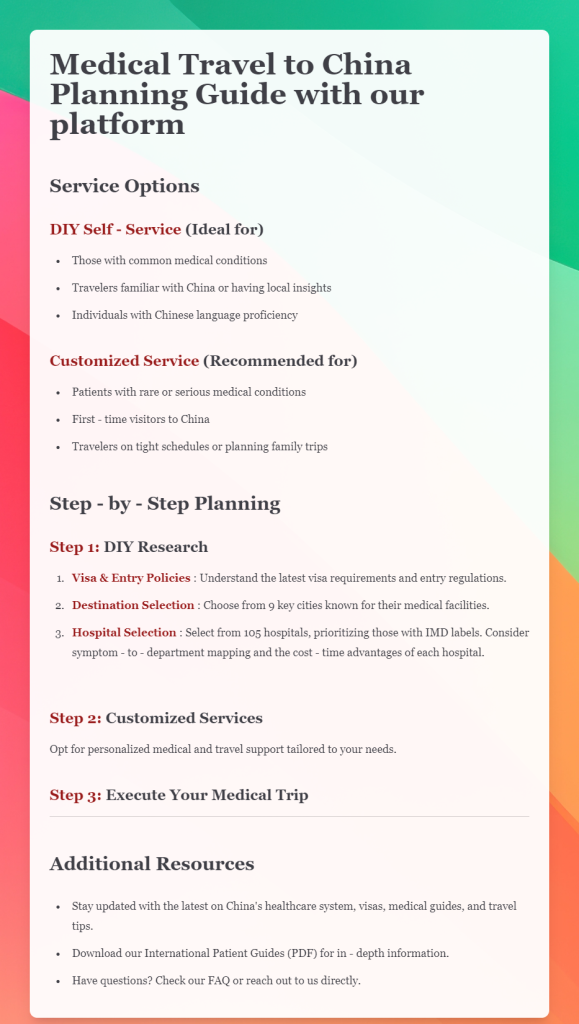
Our website provides comprehensive guides for medical travel to China—covering visas, destinations, hospitals, departments, medical costs, and travel tips. We encourage international patients to use our self-service resources first to save costs and maximize flexibility in planning your travel. We also provide you with thoughtful Customized Service. Here are some consideration factors for you:
What kind of service should you choose: DIY vs. Customized Service?
✅ Choose DIY (FREE) if you:
- Have common, clear medical conditions
- Prefer to plan your own trip
- Know basic China travel or have local help
- Want full control & lower cost
- Have flexible schedule
✅ Choose Customized (Premium) if you:
- Have complex, serious, or rare conditions
- Want 1-on-1 support, translation & coordination
- Need fast hospital appointments
- Travel with family or have a tight schedule
- Want zero-hassle, full-service experience
In short, please choose the service mode that most suits you according to your own situation!
Optimize your journey — start with our guides!
Please Click Here to Learn more detailed User Guide, of which the abstract is below.
Leave a Reply
You must be logged in to post a comment.
Beyond medical arrangements, I’d also like to travel in China. Do you provide related information?
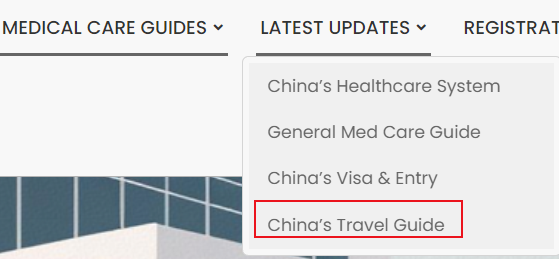
Yes! We recognize many international patients seek both medical and tourism services. This sub-channel “China’s Travel Guide” offers curated travel resources—covering dining, accommodations, transportation, sightseeing, shopping, and entertainment. We also promptly publish China’s latest favorable policies for foreigners like tax-free shopping benefits.

Should there be significant demand from international patients for travel resources, guided tour services, or exclusive travel deals in the future, we will consider launching a dedicated channel with enhanced features.
Leave a Reply
You must be logged in to post a comment.
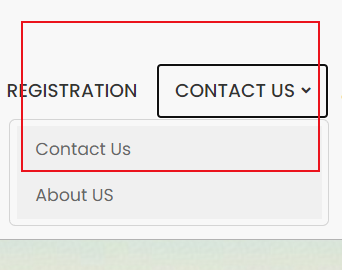
Yes, you’ve observed very carefully. The three interaction methods on this website are Comment Section, Feedback Section and Contact Us. But the positioning and functions of them are distinctly different.
1. Comment Section

2. Feedback Section
3. Contact Us
| Item | Interaction | Description | Aim |
| 1 | Comment Section | You can engage in discussions here with all users (including but not limited to website administrators, editors, and other registered users), and all these comments will be visible to everyone. | This function aims to enhance the interaction among different users. Note: Some functions of this website rely on the number of comments, such as “Popular Articles” and “Popular Hospitals”, etc. However, please note that the number of comments doesn’t necessarily have a direct connection with the quality of the articles or hospitals. |
| 2 | Feedback Section | It shows to the right center of every page. If you find any errors on a certain page or have any suggestions for improvement, you are welcome to contact the “Administrator” here. However, other users won’t be able to see your feedback. | This function is designed to collect user feedbacks and continuously improve the user experience of this website. |
| 3 | Contact US | If you have any further questions after browsing the information on this website, or if you need a one-on-one personalized medical guidance or travel guidance services, you can submit your needs to our “Customer Service” here. | This function aims to give you individual response or provide you with personalized services. |
Leave a Reply
You must be logged in to post a comment.
2. Medical Travel To China (9)

1. Cost-effective Quality Care
❌ Pain-points for some foreign patients:
High medical costs in Western countries, like a $2,000+ MRI scan, and potential bankruptcy due to bills (e.g., appendectomy costs $32,000 vs. $1,000 in China).
✅China’s Healthcare Advantages:
– Cost-Efficiency: Top Chinese hospitals charge 1/5 to 1/3 of Western prices (e.g., heart surgery $10,000-$15,000 in China vs. $50,000 in the U.S.).
– Transparent Pricing: Government-regulated fees with itemized costs (e.g., 20-50 RMB consultation fee).
– Price Control: Lower drug prices (70-90% less than U.S.) via government policies.
2. Short Waiting Times
❌ Pain-points for some foreign patients:
Long waits for non-emergency appointments (6 months in Germany) and in emergency rooms in Western countries.
✅ China’s Healthcare Advantages:
– VIP Fast-Track: International depts. offer priority access (e.g., same-day consults in Peking Union Medical College Hospital).
– High-Capacity: Leading hospitals handle 5,000+ daily visits (e.g., 9.38 million annually in First Affiliated Hospital of Zhengzhou University).
– AI Scheduling: Reduces waiting by 30-40% with smart platforms.
3. Cutting-edge Medical Technology
❌ Pain-points for some foreign patients:
Limited access to advanced treatments in some countries.
✅ China’s Healthcare Advantages:
– Global Top Hospitals: 12 in 2024 Fudan ranking (e.g., Peking Union at #24, same robotic system as Johns Hopkins).
– AI Innovation: AI-assisted diagnosis with 95% accuracy, reducing misdiagnosis by 30%.
– Surgical Expertise: World-leading liver transplant survival (93% 5-year) and robotic prostate surgeries (99% success).
4. Traditional Chinese Medicine (TCM)
❌ Pain-points for some foreign patients:
Over-reliance on drugs in Western medicine, lack of options for chronic pain.
✅ China’s Healthcare Advantages:
– Integration: Combines Western and TCM (e.g., leukemia treatment with 99% remission).
– Personalized Programs: AI-driven, reduces relapse (e.g., kidney disease by 40%).
– Low Side-Effects: Natural ingredients, reduces chemo nausea by 58%.
5. World-class Support Services
❌ Pain-points for some foreign patients:
Language barriers and unfamiliar systems deter foreigners.
✅ China’s Healthcare Advantages:
– Multilingual Navigators: 24/7 in 15+ languages, AI kiosks in top hospitals.
– Certified Translators: Trained by CIMTA, minimizes errors by 98%.
– Insurance Integration: 80% of top hospitals partner with 2,000+ insurers, fast claims.
6. Visa Convenience & Medical Tourism
❌ Pain-points for some foreign patients:
Complex medical visa procedures in some countries.
✅ China’s Visa Policy Advantages:
– Visa-Free Network: Agreements with 157 countries, 38 with unilateral policies, 240-hour waiver in 60 ports.
– Tech Efficiency: Reduced items, fees, and AI for translation, fast claims.
– Economic & Cultural: Boosted tourism, 17.446 million visa-free entries in 2024.
Other socioeconomic advantages
A. Safe Social Environment
China is widely recognized for its strict public safety measures, including comprehensive gun control, 24/7 police patrols, and efficient metro security checks. Numerous foreigners have frequently highlighted the ability to walk safely at deep night at city centers in China.
B. Cost-Effective Living
Affordable prices for daily necessities (e.g., food, clothing) and services (e.g., dining, transportation) significantly reduce overall expenses.
C.Seamless Payment Systems
China’s payment ecosystem has been optimized for international visitors.
D. Streamlined Accommodation and Travel
Recent policies mandate hotels to simplify check-in processes for foreigners, provide multilingual signage, and offer AI translation tools.
E. Equal Treatment Policies
China ensures foreigners enjoy the same pricing as locals in most sectors, from healthcare to retail.
F. Efficient Transportation Network
- High-Speed Rail (HSR): The world’s largest HSR network connects major cities (e.g., Beijing to Shanghai in 4.5 hours), enabling quick access to specialized hospitals.
- Air Connectivity: Over 250 international flights daily from hubs like Beijing Capital Airport and Shanghai Pudong Airport.
- Urban Mobility: Ride-sharing apps (Didi) and subway systems in cities like Guangzhou ensure seamless local travel.
Take the First Step Today
“Experience seamless care in state-of-the-art facilities, supported by compassionate professionals. Let China’s medical expertise restore your health and peace of mind.”
China’s healthcare combines cost, tech, and culture, solving Western patients’ problems. Ideal for surgery, chronic care, or wellness, China is a top medical tourism choice.
Leave a Reply
You must be logged in to post a comment.
We have carefully selected nine medical destinations across China for international patients: Beijing, Shanghai, Tianjin, Chongqing, Guangzhou, Wuhan, Xi’an, Haikou, and Sanya. Among these, Beijing and Shanghai offer China’s top-tier healthcare & tourism resources, making them the primary recommendations for medical travelers.
Leave a Reply
You must be logged in to post a comment.
For international patients seeking medical care in China, we recommend prioritizing disease categories where China demonstrates significant advantages in both treatment efficiency and cost-effectiveness compared to other countries.
In addition, we recommend prioritizing disease categories with treatment durations under 30 days. This approach offers three key advantages:
- Cost predictability: Short-term treatments allow precise calculation of cross-border medical expenses, minimizing financial uncertainties.
- Reduced logistical risks: Shorter stays mitigate challenges such as prolonged waiting periods and visa expiration risks.
- Cultural integration: Patients can efficiently combine medical visits with exploring local cultural landmarks or regional tourism during their stay.
For conditions requiring prolonged treatment (>30 days), we strongly advise thorough pre-travel planning. Key steps include:
- Coordinating with your target hospital to align treatment schedules and visa validity periods.
- Confirming accommodation and follow-up care arrangements to ensure continuity.
Additional Recommendations for Foreign Tourists who plan to travel to China: You are encouraged to integrate quick, affordable healthcare services into your itineraries, such as:
- Dental procedures (e.g., wisdom tooth extraction)
- Optical services (customized high-index lenses or contact fittings)
- Vaccinations (HPV or travel-specific vaccines)
- Preventive health screenings (comprehensive medical checkups)
- Traditional Chinese Medicine (TCM) therapies (acupuncture, cupping, or therapeutic massage)
These healthcare services are highly efficient and cost-effective in China, with dental implants costing 40–60% less than in Europe and same-day optical lens customization available. For tourists, combining medical care with cultural experiences—such as post-treatment visits to historical sites or wellness retreats—enhances the overall travel experience while optimizing time and budget.
Leave a Reply
You must be logged in to post a comment.
If you are planning to travel to China for medical treatment, choosing the correct visa is your first crucial step. Generally, you may apply for an L visa (Tourist Visa), an S2 visa (Private Affairs Visa for short-term visits), or an S1 visa (Private Affairs Visa for long-term stays), depending primarily on the expected duration of your treatment.
Here is a simple guide to help you decide:
- For Short-term Treatment (Up to 30 Days):
- Visa-Free Entry: Citizens from over 75 countries can enter China visa-free for up to 30 days. This is often sufficient for consultations, outpatient procedures, minor surgeries, and initial diagnostics.
- L Visa (Tourist Visa): If your country is not on the visa-free list, or if you need a visa for entry, the L Visa is the standard and simplest option for short medical visits.
- For Long-term or Complex Treatment (Exceeding 30 Days):
- S2 Visa (Short-Term Private Affairs Visa): This is the primary medical visa for planned treatments such as chemotherapy cycles, major surgeries with recovery, or rehabilitation programs lasting more than 30 days but less than 180 days.
- Key Requirement: You must apply for the S2 Visa in advance at a Chinese embassy or consulate. The most important document is an official invitation letter issued by the admitting Chinese hospital in China.
- For Very Long-term Stays (Over 180 Days):
- S1 Visa (Long-Term Private Affairs Visa): Required for treatments expected to last more than 180 days. After entering China with an S1 Visa, you must convert it to a residence permit.
Important Clarification:
There is no specific “M Visa for Medical Treatment.” The M Visa is designated exclusively for commercial and trade activities. Applying for the wrong visa type may lead to entry refusal.
Our Advice:
Always confirm the exact treatment plan and expected timeline with your chosen hospital in China first. Their international patient department can provide the correct invitation letter and guide you on the most appropriate visa pathway.
Leave a Reply
You must be logged in to post a comment.
Generally, Yes.
During their travels in China, foreigners can freely go to Chinese hospitals for medical treatment with their passports. Moreover, when foreigners visit public hospitals in China (excluding the international medical departments), the medical treatment fees are basically the same as those for Chinese citizens. However, if you require higher-quality and more expedited medical services, it is advisable that you choose the international departments of public hospitals, international hospitals, or private hospitals. The drawback is that the medical treatment fees will be relatively higher (may be 3-10x higher than those of public hospitals).
In terms of medical standards and treatment protocols, foreigners in China generally receive the same quality of care as Chinese citizens. Public hospitals and licensed private clinics follow uniform clinical guidelines, ensuring that diagnosis, medications, and surgical procedures meet China’s healthcare regulations.
Leave a Reply
You must be logged in to post a comment.
Mobile payment platforms like WeChat Pay and Alipay are widely accepted across China, including shopping malls, hospitals, and tourist attractions. While this might initially feel unfamiliar to foreign visitors, China has significantly improved mobile payment accessibility in recent years.
Please refer to this page to learn “how to use Mobile Payment in China”.
And here’s a concise guide:
Key Steps for Foreigners:
1.Download & Registration
• WeChat Pay:
– Link Visa, Mastercard, JCB, or Discover cards via Me > Wallet.
– Simplified registration: Use an international phone number and bypass ID verification for small transactions.
• Alipay:
– Supports Visa, Mastercard, Diners Club, or Discover cards.
– Offers 16-language translation for services like taxi hailing and hotel booking.
2.Transaction Limits
• Single transaction: Up to $5,000 (raised from $1,000).
• Annual limit: $50,000 (raised from $10,000).
3.No ID Required for Small Payments
• Transactions under a certain amount (unspecified) do not require identity verification.
4.Use Home E-Wallets
• Visitors from Singapore, Malaysia, Thailand, etc., can scan Alipay QR codes with apps like Touch’n Go or Kakao Pay without downloading Chinese apps.
5.Support for Cash & Cards
• Foreign bank cards (Visa, Mastercard, UnionPay) are accepted at most 3-star hotels, 5A/4A tourist sites, and major retailers. • Withdraw RMB cash via ATMs with international card logos.
Recent Improvements
- Simplified Process: Binding foreign cards now takes under 1 minute.
- Multilingual Support: Alipay’s translation covers taxi, hotel, and public transport scenarios.
- Diverse Options: Use digital RMB (e-CNY) in pilot cities like Beijing and Shanghai.
Note: China’s payment systems now blend cash, cards, and mobile apps seamlessly, ensuring a “smooth” experience.
Leave a Reply
You must be logged in to post a comment.
Can I come to China for medical treatment alone? Is it safe?
Yes, it is entirely feasible and generally safe to come to China for medical treatment alone.
The key is China is one of the safest countries in the world for international patients, with low crime rates, 24/7 public security, and convenient transportation. Most hospitals in Beijing and Shanghai provide dedicated international patient support, including translation, appointment help, and accommodation guidance. You can receive professional care even if you travel alone.
With proper planning and by choosing hospitals with international patient centers, your experience of receiving medical treatment in China alone can be smooth and secure.
Leave a Reply
You must be logged in to post a comment.
Can my family member come with me during treatment? What visa do they need?
Yes, your family members can absolutely accompany you to China for medical treatment. Their presence can provide crucial emotional and practical support during your healthcare journey.
What visa do they need?
Accompanying family members typically need to apply for a Tourist (L) Visa. They cannot use the medical visa documents issued for you (such as the S2 Visa) for their own entry. The Tourist Visa is the standard and most straightforward option for relatives who will stay with you for caregiving and companionship.
Key Points to Remember:
- Separate Applications: Your family must apply for their visas independently, through the Chinese embassy or consulate in their home country.
- Supporting Documents: While requirements vary, it is often helpful for them to submit a copy of your medical visa, the hospital’s invitation letter, and proof of your relationship (e.g., marriage or birth certificate) to strengthen their application.
- Primary Purpose: The stated purpose of their visit is tourism and family visitation, not receiving medical treatment themselves.
- Planning Ahead: Visa processing takes time. We recommend initiating the family members’ visa applications as early as possible, ideally concurrently with your medical visa process, to ensure you can travel together.
Need Help?
Navigating visa requirements can be complex. If you need assistance with documentation or understanding the latest regulations for accompanying relatives, please feel free to contact our support team for guidance.
Leave a Reply
You must be logged in to post a comment.
If your medical treatment in China takes longer than expected, you can easily apply for a visa extension—follow these steps to avoid overstaying and ensure compliance with local regulations:
1. When to Apply for an Extension
You must apply for a visa extension before your current visa or stay period expires. It’s recommended to submit your application 7–10 days in advance to allow time for review.
- Overstaying your visa may result in fines, deportation, or difficulty obtaining future Chinese visas.
- The extension process typically takes 3–5 working days, so plan accordingly.
2. Required Documents for Extension
Prepare these documents to submit to the local Exit and Entry Administration Bureau:
- Valid passport (original and a copy of the photo page and current visa).
- A formal medical certificate from your treating hospital, stating your medical condition and the need for an extended stay.
- Completed visa extension application form (available at the bureau or online).
- Proof of accommodation in China (e.g., hotel booking or rental agreement).
3. Step-by-Step Extension Process
- Visit the Local Exit and Entry Administration Bureau: Locate the bureau in the city where you’re receiving treatment (e.g., Shanghai Exit and Entry Administration Bureau).
- Submit Your Documents: Present your passport, medical certificate, application form, and other required materials to the staff.
- Pay the Extension Fee: A small fee (usually around ¥200) is required for the extension—accepts cash or credit card.
- Wait for Review: The bureau will review your application based on your medical needs. You may be asked to provide additional documents if needed.
- Collect Your Passport: Once approved, pick up your passport with the extended visa stay period, or have it mailed to your accommodation.
Pro Tip: Ask your hospital’s international patient office to help you prepare the medical certificate—they are familiar with the requirements for visa extensions and can ensure the document meets official standards.
Leave a Reply
You must be logged in to post a comment.
3. Medical Care Guide in China (10)
1. Understanding China’s Healthcare System
1.1 Public vs. Private Hospitals:
- Public Hospitals: Affordable but often crowded, with long wait times. They dominate China’s healthcare system (90% of services). International departments or VIP wards in public hospitals (e.g., Shanghai Ruijin Hospital) offer English services and shorter queues.
- Private/International Hospitals: More expensive but provide multilingual staff, faster service, and Western standards (e.g., Parkway Shanghai Hospital, United Family Healthcare).
1.2 Hospital Grades:
- Tier 1 (community clinics), Tier 2 (district/county hospitals), and Tier 3 (large specialized hospitals).
* Our website has curated top-tier hospitals across 9 major cities, with over 95% being Grade III, Level A facilities – including public, private and international hospitals. Click the link to begin your search for hospitals.
2. Choose a Suitable Hospital
2.1 Hospitals with International Departments:
In major cities (e.g., Beijing, Shanghai, Guangzhou), many large – scale hospitals (such as those affiliated with top medical universities) have international departments. These departments often have English – speaking staff and are more experienced in handling foreign patients. For example, in Hainan, a tourist – friendly province, some hospitals are also equipped to serve international patients.
2.2 Research in Advance:
You can search online (using English – language search engines or hospital official websites which may have an English version) or ask for recommendations from your embassy, consulate, or local expat communities.
* You may also choose public hospitals without international departments, though be advised wait times are typically longer and English support may be limited.
* Select your ideal hospital based on travel itinerary, medical budget and specific health needs. Click the link to begin your search for hospitals.
3. Registration and Appointment
3.1 Required Documents:
- Passport or Foreign Permanent Residence ID Card.
3.2 Appointment Options:
- Online: Use hospital WeChat accounts (e.g., Guangzhou First People’s Hospital) or apps like Suishenban (Shanghai). First-time users may need offline registration at designated counters.
- Walk-in: Arrive early for on-site registration (common in public hospitals).
4. Consultation and Treatment
4.1 Registration:
- Pay a fee (¥20–50) to obtain a hospital card.
4.2 Consultation:
- Wait for your number. Doctors may perform basic checks (e.g., blood pressure).
4.3 Payment:
- Fees are settled step-by-step (consultation → tests → medication).
- Undergoing Tests: For tests like CT, ultrasound, or MRI (as in the example), if pre – appointment is required (especially for some advanced equipment), follow the instructions to make an appointment at the relevant examination window. Some hospitals have staff who can assist with booking and provide basic guidance in English.
- Collecting Medicine: After payment, go to the pharmacy (usually indicated by signs in English and Chinese). Present your receipt and medication list (if provided by the doctor). The pharmacist will dispense the medicine and may give instructions on dosage (some hospitals have English – language labels on the medicine packaging).
4.4 Prescriptions:
- Collect medicines from the pharmacy with your prescription.
4.5 Special Notes:
- Follow Doctor’s Instructions: The doctor may order tests (such as blood tests, X – rays, CT, etc.) or prescribe medication. Understand the instructions clearly. If there are follow – up appointments, note the time and requirements.
- Describe Symptoms Clearly: Use simple language to explain your symptoms. If you have a medical history document (in English), present it to the doctor. For example, “I have had a cough and fever for three days. Last year, I had a similar situation and was diagnosed with [condition].”
- Traditional Chinese Medicine (TCM): Many hospitals integrate TCM (e.g., acupuncture, herbal medicine).
- Privacy: Expect shared consultation rooms in public hospitals.
5. Costs and Insurance
5.1 Typical Costs:
- Consultation: ¥20–200 ($3–30).
- Surgery: Up to thousands of RMB, depending on your condition.
- Complex cases: varied, depending on your condition.
5.2 Insurance Options:
- If you have health insurance (either international or purchased in China), bring the relevant details for potential claim procedures.
- suggestions for Expats: Purchase international health insurance covering inpatient/outpatient care (e.g., direct billing plans from insurers like Cigna or Allianz).
- Insurance Reimbursement: If your insurance covers treatment in China, keep all receipts, diagnosis reports, and invoices. Follow your insurance company’s procedures for reimbursement, which may involve submitting these documents (translated if necessary) to the insurance provider.
5.3 Payment Methods:
- Cash (common in public hospitals).
- Alipay/WeChat Pay.
- Credit cards. Many also accept international credit cards (such as Visa, MasterCard) at certain payment counters. Check with the hospital staff.
6. After – visit Procedures
6.1 Obtaining Reports:
- For test reports, check the designated area (either a self – service machine or a specific counter). Some hospitals also send electronic reports to your registered email (if provided during registration) or through their app/WeChat account.
6.2 Requesting Invoices:
- If you need an invoice (for insurance or other purposes), go to the designated window (usually marked clearly). Provide your payment details and identification (passport) for processing.
7. Key Tips for Foreigners
7.1 Language Barriers:
If you don’t speak Chinese, you can:
- Bring a Chinese – speaking friend or hire a professional translator.
- Use translation apps (like Google Translate, which can provide real – time text or voice translation). Show the translated content to the doctor or use the voice – to – voice translation feature.
- Use hospitals with international departments (e.g., Huashan Hospital in Shanghai). And Request translation services via hospital volunteers or apps, if needed.
7.2 Cultural Adaptation:
- Respect TCM practices and preventive health beliefs (e.g., Tai Chi).
- Note that doctors may spend less time per patient compared to Western countries due to massive patients.
7.3 Preventive Measures:
- Carry common medications from home.
- Stay hydrated with bottled water.
7.4 Emergency Care
- Emergency Hotline: Dial 120 for an ambulance.
- Emergency Rooms: Available in all Tier 3 hospitals. Priority is given to severe cases (e.g., bleeding, fractures).
Leave a Reply
You must be logged in to post a comment.
The above guiding articles provide only text-based instructions for foreigners seeking healthcare in China. Using Beijing as an example, we will offer enhanced guidance through visual formats like infographics and instructional videos.
Visting doctors in China’s hospitals
Medical Guide for International Patients in Beijing
[Video] How to See a Doctor in Beijing?
(Animated Video) Beijing’s Hospital Safety Inspection Regualtions
Visiting Process for International Patients – Peking Union Medical College Hospital
Please be noted, the hospital process in other cities is very similar to Beijing’s. So, if you plan to visit other cities’ hospital, you can refer to the below guides very safely.
Additionally, our platform has compiled preliminary medical guides for each hospital (see the “2. Medical Care Guide” tab on each hospital’s profile page) for your references.
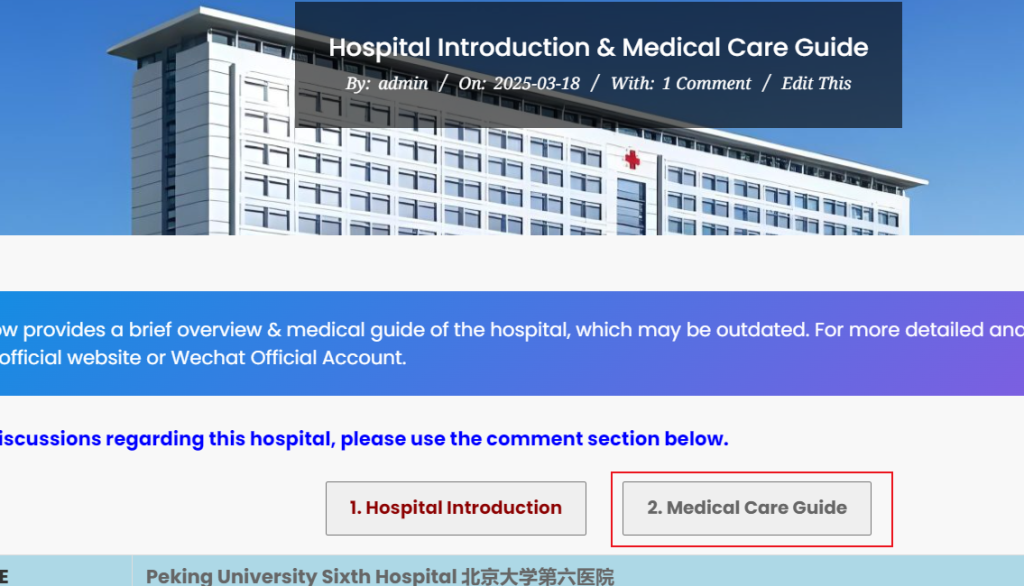
However, our platform cannot guarantee real-time updates on all hospitals’ latest information, so occasional delays or inaccuracies may occur. Thus, before your departure, we highly recommend you checking the hospital’s official website, WeChat Official Account, or contacting them directly via email or phone for more detailed and latest instructions.
Leave a Reply
You must be logged in to post a comment.
Chinese hospitals have implemented security check procedures similar to those at airports and train stations for several important reasons, all aimed at creating a safer and more secure environment for both patients and medical staff:
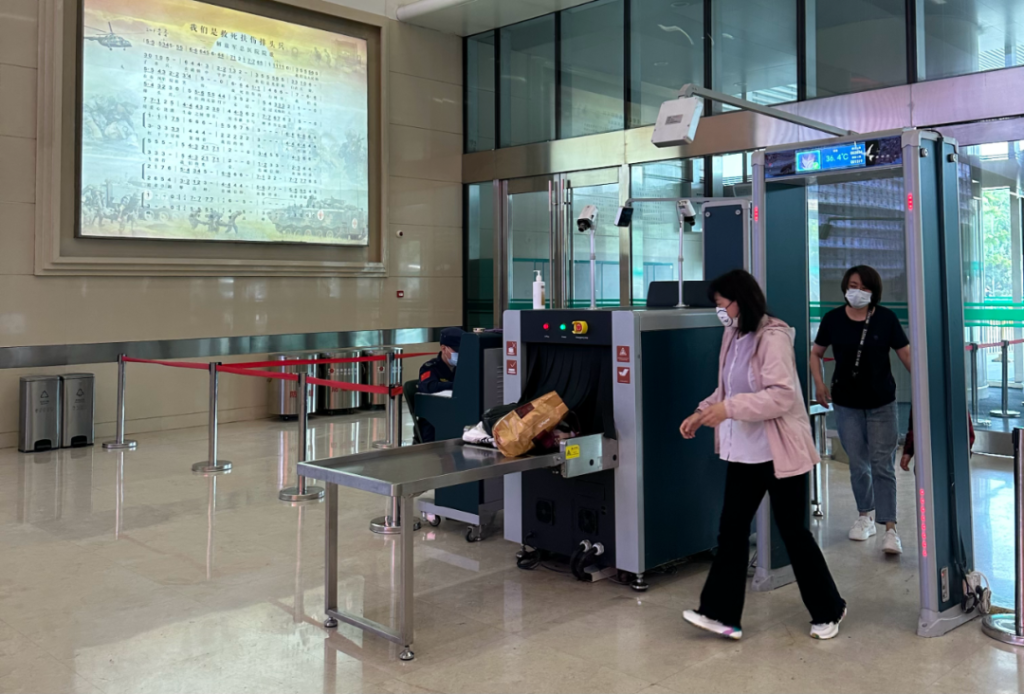
1. Protecting Medical Staff and Patients:
– Preventing Violent Incidents: In recent years, there has been some violent attacks on medical staff in China’s hospitals, which has led to a strong call for enhanced security measures. Security checks help prevent dangerous items such as knives and explosives from entering the hospital, thereby reducing the risk of violent incidents.
– Ensuring Patient Safety: Security checks not only protect medical staff but also ensure the safety of patients, especially those in critical condition who may be more vulnerable.
2. Maintaining Order and Efficiency:
– Managing Hospital Order: Hospitals are busy environments with a large number of people. Security checks help maintain order and prevent disruptions that could affect the normal functioning of the hospital.
– Improving Medical Services: By ensuring a safe environment, hospitals can focus on providing high-quality medical services without the constant threat of violence.
3. Enhancing Public Trust and Confidence:
– Building Trust: Implementing security checks demonstrates a commitment to the safety and well-being of both patients and staff, which can enhance public trust in the healthcare system.
– Encouraging Positive Interaction: A safe environment encourages better interaction between patients and medical staff, leading to improved medical outcomes.
4. Compliance with Regulations:
– Legal Requirements: In some regions, such as Beijing and Shanghai, local regulations require hospitals to implement security checks to ensure public safety. These regulations are designed to protect the rights of medical staff and patients and to maintain social harmony.
5. Learning from International Best Practices:
– Global Standards: Similar to airports and train stations, hospitals are public places where security is paramount. Implementing security checks aligns with international standards for public safety.
In summary, the implementation of security checks in Chinese hospitals is a proactive measure to ensure safety, maintain order, and enhance the overall quality of medical services. It is a necessary step to protect the well-being of both medical staff and patients, and to foster a more harmonious and efficient healthcare environment.
(Animated Video) Beijing’s Hospital Safety Inspection Regualtions
Leave a Reply
You must be logged in to post a comment.
If the 105 hospitals in 9 cities listed on our platform don’t meet your needs, we recommend checking the official website of the National Health Commission of the People’s Republic of China for more Information.
Leave a Reply
You must be logged in to post a comment.
Also, international patients might also ask: Does China regulate medical fees?
A: Yes, China’s healthcare pricing is strictly regulated by national and regional policies, but flexibility varies by hospital type. Besides, international patients can get the same healthcare as locals in China.
- Public Hospitals – Follow mandatory government price lists for services, drugs, and procedures (set by the National Healthcare Security Administration). Prices are standardized but may adjust slightly by region.
- Private/International Hospitals – Must comply with baseline pricing rules but can charge premiums for “non-essential” services (e.g., VIP care, foreign-language support).
- Exceptions:
- International Departments in public hospitals often charge higher fees for expat-focused services.
- High-end private chains (e.g., United Family, ParkwayHealth) set market-driven prices but remain under oversight.
Why It Matters:
- Ensures affordability but limits profit-driven pricing.
- Foreign patients may pay more for “added-value” services.
Leave a Reply
You must be logged in to post a comment.
If you’re concerned about language barriers during your medical visit in China, rest assured that top-tier hospitals have robust systems in place to ensure clear communication:
1. Choose Hospitals with International Departments
Nearly all leading hospitals in Beijing, Shanghai, Guangzhou, and Shenzhen have dedicated International Medical Centers or VIP Departments. These units are staffed with:
•Professional medical interpreters: Trained bilingual staff who specialize in medical terminology.
•English-speaking doctors: Many senior physicians in these departments are fluent in English.
Pro Tip: Look for hospitals labeled as “International Patient-Friendly” on their websites or contact their international office directly to confirm language support.
2. Use Translation Apps as a Supplement
For quick clarifications or non-critical discussions:
•Google Translate (Conversation Mode): Works offline and supports voice-to-voice translation.
•Microsoft Translator: Offers real-time text and image translation (e.g., scanning medical documents).
•WeChat Translation Plugin: Integrates seamlessly into WeChat for instant messaging with hospital staff.
Important: Avoid relying solely on apps for complex medical discussions (e.g., diagnosis explanations).
3. Request Translation Support When Booking
When scheduling your appointment:
•Clearly state your need for English interpretation via email or the hospital’s online booking system.
•The hospital will arrange a translator (often free of charge for international patients).
Example Email Template: “Hello, I am [Your Name], an international patient scheduled for [Procedure] on [Date]. I would like to request an English-speaking interpreter for my consultation. Could you please confirm this arrangement?”
Leave a Reply
You must be logged in to post a comment.
Booking a doctor’s appointment as an international patient in China is simple—follow these convenient channels and steps to secure your consultation smoothly:
1. Choose Your Booking Channel
Foreign patients have 4 reliable options to book appointments, tailored to your preferences:
- Hospital Official Websites: Most top hospitals (e.g., Huashan Hospital, Ruijin Hospital) have English-language booking portals for international patients.
- International Patient Office: Call or email the hospital’s dedicated international office—staff will assist you with booking directly.
- WeChat Service Accounts: Search for the hospital’s official WeChat account, navigate to “Appointment Booking,” and follow the prompts.
- On-Site Registration: Visit the hospital’s International Service Counter in person—ideal if you prefer face-to-face assistance.
2. Required Documents for Registration
For first-time bookings, you’ll need to provide basic identification to complete registration:
- Valid passport (original or digital copy).
- Medical records or appointment confirmation (if you have a pre-scheduled treatment plan).
- Contact information (phone number or email) for appointment notifications.
3. Step-by-Step Booking Process
- Select your preferred channel (website/WeChat/international office).
- Choose the department (e.g., Oncology, Orthopedics) and specialist you need.
- Pick a convenient appointment time slot (note: peak hours may have limited availability).
- Submit your passport information and contact details for verification.
- Receive a confirmation message (via SMS or email) with your appointment ID and details.
Pro Tip: Book your appointment 1–2 weeks in advance for popular specialists. If you need to reschedule, contact the hospital at least 24 hours before your appointment to avoid no-show fees.
Leave a Reply
You must be logged in to post a comment.
Yes, you can easily obtain official English-language medical reports in China—critical for follow-up treatment, insurance claims, and consultations in your home country. Here’s how:
1. What English Documents Are Available?
Top hospitals for international patients provide translated versions of all key medical documents:
- Medical records (treatment history, diagnosis, and care plans).
- Test results (blood work, imaging scans, lab reports).
- Diagnosis certificates and treatment summaries.
- Prescriptions (translated into English for international pharmacies).
2. How to Request English Medical Reports
- Submit a Request: Visit the hospital’s Medical Records Office or International Patient Service Center after your treatment.
- Provide Identification: Show your passport and patient registration ID (given during your first visit) for verification.
- Specify Documents: Tell staff which documents you need (e.g., “all test results and treatment summary”).
- Collect or Receive Digitally: Most hospitals provide physical copies on the same day; some offer digital versions via email or a secure portal.
3. Key Details to Note
- Cost: Many hospitals provide English translations free of charge for international patients; some may charge a small fee for large volumes of documents.
- Validity: These translated documents are official and widely accepted by hospitals, insurance companies, and medical boards worldwide.
- Certification: If you need a certified translation (e.g., for visa or legal purposes), ask the hospital to stamp the documents with their official seal.
Pro Tip: Request your English reports 1–2 days before your departure to avoid last-minute delays. If you forget, most hospitals can mail the documents to your home country for a small shipping fee.
Leave a Reply
You must be logged in to post a comment.
China’s emergency medical system is efficient and foreign-patient-friendly—follow these steps to get immediate care if you face a medical emergency during your stay:
1. Call for Emergency Assistance
In any life-threatening or urgent situation, dial 120 (China’s national emergency hotline)—available 24/7, nationwide.
- The operator will ask for your location, symptoms, and whether you need an ambulance.
- If you don’t speak Chinese, say “English” clearly—many operators have basic English skills, or they will connect you to a translator.
- Ambulances are equipped with professional medical staff and life-saving equipment, and response times are fast in major cities (5–15 minutes).
2. Emergency Department (ED) Process
Once you arrive at the hospital’s ED (all tier-3 hospitals have 24-hour emergency care), follow this process:
- Triage Desk: A nurse will assess your condition and prioritize your care (critical patients are seen first).
- Treatment First, Registration Later: For life-threatening conditions (e.g., heart attack, severe injury), hospitals provide treatment first, registration and payment later—no need to worry about delays.
- Registration & Payment: After initial stabilization, you or your companion will complete registration (using your passport) and pay for services.
3. Tips for International Patients in Emergencies
- Carry your passport and medical information: Keep a copy of your medical records, allergies, and current medications in your wallet or phone.
- Ask for an interpreter: ED staff can arrange a medical translator if you need help explaining symptoms or understanding treatment.
- Contact your hotel or our team: If you’re traveling alone, inform your accommodation or our support team so they can assist with logistics.
Important: Avoid going to small clinics for emergencies—only tier-3 hospitals or dedicated emergency centers have the equipment and staff to handle critical conditions.
Leave a Reply
You must be logged in to post a comment.
You can bring your own prescription medicine into China for personal use—follow these rules to avoid customs issues and ensure compliance with local regulations:
1. Permitted Medicine for Personal Use
Customs allows foreign patients to bring prescription medicine as long as it meets these criteria:
- For personal use only (reasonable quantity for your treatment duration in China).
- Not a controlled substance (e.g., opioids, certain psychiatric drugs—check China’s controlled drug list in advance).
- In its original packaging (with clear labels showing the drug name, dosage, and expiration date).
2. Required Documents for Customs
To avoid delays at customs, prepare these documents:
- A doctor’s prescription (original or English-translated) from your home country, stating the need for the medicine.
- A brief note explaining your medical condition (optional but recommended for smoother customs clearance).
- Original medicine packaging (do not repackage the medicine into unlabeled containers).
3. What to Avoid
- Large quantities of medicine: Customs may confiscate medicine that exceeds a reasonable personal use amount (e.g., more than 3 months’ supply).
- Controlled or illegal drugs: These are strictly prohibited and may result in fines or legal consequences.
- Unlabeled or repackaged medicine: Customs may not recognize unlabeled medicine, leading to delays or confiscation.
Pro Tip: If you’re unsure whether your medicine is permitted, contact the Chinese Embassy or Consulate in your home country in advance. You can also consult your Chinese hospital for guidance on local drug regulations.
Leave a Reply
You must be logged in to post a comment.
4. Wellness Services in China (1)
Yes, we plan to further expand into wellness navigation services, building on our existing medical navigation services for international tourists. This is because China’s wellness services, like its professional medical services, are highly competitive in the international market, with excellent service quality and cost-effectiveness. They are very popular among many international tourists.
In recent years, we have seen an increasing number of foreign tourists coming to China to enjoy high-quality wellness services, including: Medical Aesthetics (such as Hair Transplantation, Cosmetic Surgery, and Non-Invasive Treatments, etc.), Wellness and Preventive Care (such as Health Screening, Anti-Aging Services, and traditional Chinese medicine-based health and wellness), and oral care, among others.
The Wellness Service Navigation section is still under construction. We welcome you to click on “Contact Us” to submit your valuable suggestions to us.
Leave a Reply
You must be logged in to post a comment.
Comments are closed, but trackbacks and pingbacks are open.