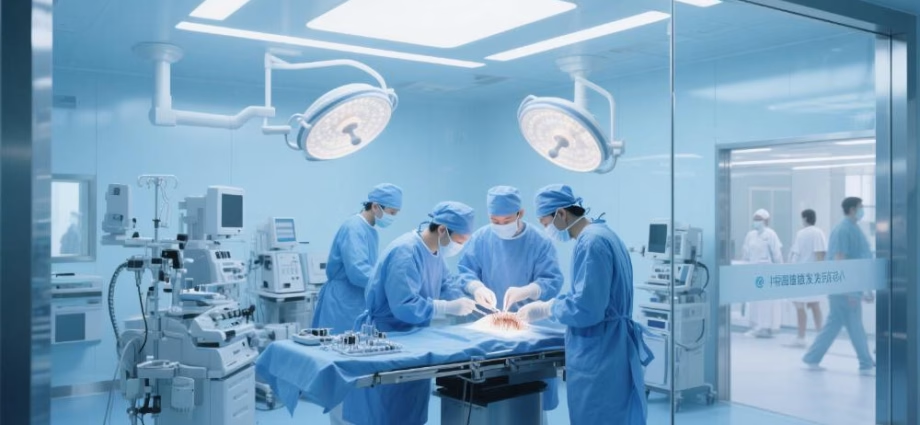
Hair Transplant in China for International Patients is a top choice for affordable, high-quality FUE surgery in 2026. This guide covers costs, top clinics, visa-free options, and everything you need to plan your medical journey.
Why Choose Hair Transplant in China for International Patients
For global patients, Hair Transplant in China for International Patients offers competitive costs and access to top surgeons.
1. Advantages of Hair Transplant in China
Cost – Effectiveness
Hair transplant costs in China are significantly lower than in the US, Europe, and Japan. While procedures in developed economies range from $8,000 to $25,000, in China, they typically cost between $3,500 and $6,000, offering quality at an affordable price.
Advanced Technology and Skilled Surgeons
Chinese clinics use advanced techniques like Follicular Unit Extraction (FUE) and robotic procedures such as ARTAS. With high domestic demand, surgeons here have extensive experience, ensuring reliable results.

Short Waiting Times
Unlike some Western countries with long waiting lists, China’s numerous clinics allow international patients to quickly schedule consultations and surgeries.
2. Visa & Entry: Step-by-Step Guide
International visitors can enter China for a hair transplant through three main visa options. We highly recommend the 30 – day visa – free policy and the 10 – day transit visa – free policy.
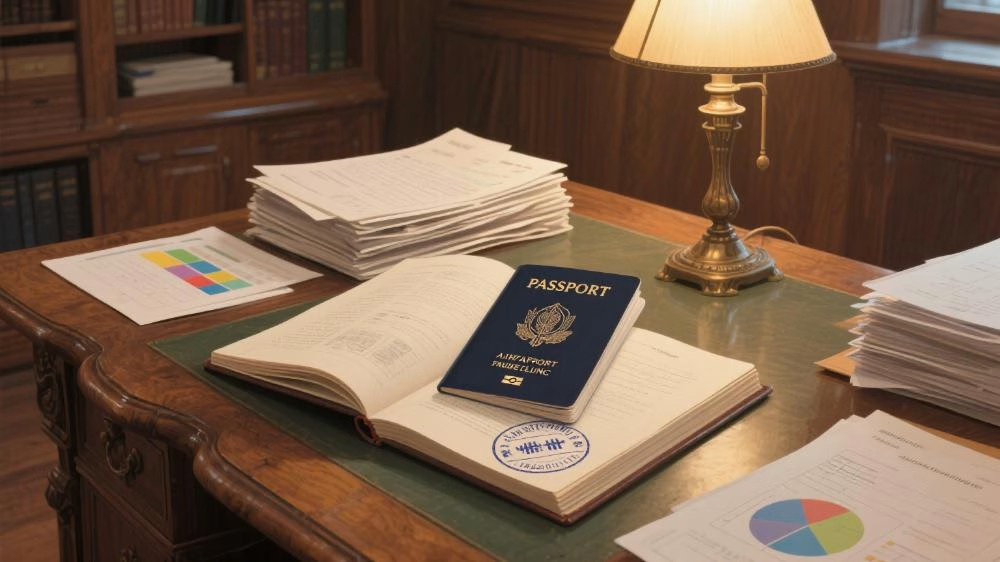
Visa Type
- A tourist visa (L visa) is generally acceptable for hair transplant if the purpose is stated as “medical tourism.”
- For complex procedures, a medical purpose visa (S2/S1) is required. You will need a hospital invitation letter and proof of payment deposit.
Visa – Free Policies
- Citizens of certain countries (e.g., France, Singapore) may enjoy visa – free stays up to 30 days.
- 240 – Hour Transit Visa – Free Policy: Citizens of 54 countries (e.g., Austria, United States, Canada) are eligible for this policy.
10 – Day Hair Transplant Itinerary
| Day | Medical Tasks | Essential Precautions |
|---|---|---|
| Day 1 | Land in China + Hospital check – in | Use dedicated transit lane at airport; show hospital invitation letter (English) |
| Day 2 | Surgery (FUE/FUT) | Duration: 4 – 8 hours; no overnight hospitalization required |
| Day 3 – 7 | Post – op recovery | STRICTLY AVOID: flights > 2 hours, strenuous activities/sweating, alcohol consumption |
| Day 8 | Follow – up + Suture removal (FUT only) | FUE patients require wound inspection only |
| Day 9 | Free activities / Departure prep | Light city tours permitted (avoid sun exposure) |
| Day 10 | Mandatory departure | Must exit before 240 – hour limit |
Note: Please check China’s latest visa policies (including visa – free) here.
3. Choosing China’s Hair Transplant Hospitals
Criteria for Choosing a Hair Transplant Institution
- Accreditation and Certifications: Look for hospitals accredited by international organizations and certified by Chinese health authorities.
- Surgeon Credentials: Check the credentials and experience of the surgeons, including their education, training, and previous work.
- Patient Reviews and Testimonials: Read reviews and testimonials from previous international patients to gauge the quality of service and care.
- Facilities and Technology: Ensure the hospital is equipped with modern facilities and the latest hair transplant technology.
- Language Services: Choose a hospital that offers language services in your preferred language to facilitate communication.
- Cost Transparency: Ensure the hospital clearly outlines all costs, including consultations, care, and potential package deals with accommodation and transfers.
How Can International Patients Verify the Qualifications?
Step 1. Check the “Three Certificates and One Record”
Request the institution to provide:
- A photo of the original “Medical Institution Practice License”
- The “Physician Practice Certificate” of the operating surgeon
- The “License for the Configuration of Large – scale Medical Equipment” (if using imported devices such as ARTAS)
- The “Record Table for Medical Aesthetic Projects” (which can be checked on the official website of the provincial health commission)
Step 2. Verification through Official Channels
- National Health Commission Official Website Inquiry: http://www.nhc.gov.cn → Access the “Medical Institution Inquiry” entry
- Local Health Commission Telephone Verification: For example, Shanghai Health Commission: +86-21-23111111 (Provide the full name of the institution for verification)
Step 3. Identify the “Certified Hospital” Mark
Legitimate institutions will display the following marks:
- Member Unit of the Chinese Association of Plastic and Aesthetic Surgery (CAPA)
- Certified Institution by the International Society of Hair Restoration Surgery (ISHRS) (e.g., Beijing Yonghe)
Recommended Hair Transplant Institutions in China
| Hospital | Description | Specializations | International Services |
|---|---|---|---|
| Yonghe Medical Group | One of China’s largest hair transplant chains, specializing in hair restoration and after – care services. | FUE-APL Microneedle Technology, Hairline Refinement | Multilingual services available; international patients receive dedicated post – op reminders |
| Barley Microneedle Hair Transplant | One of China’s largest medical groups, offering comprehensive hair treatment services with a strong market presence. | Microneedle Hair Transplant, FUT, FUE | Personalized services for international patients, including pre – op follicle vitality tests and post – op follow – up |
| BLSS Hair Transplant | A well – known hair transplant chain in China, offering non – shaving hair transplant techniques for natural – looking results. | SHT/BHT Non – Shaving Technology, Aesthetic Planting Team | 10 – year post – op agreement; free replanting if the survival rate of hair follicles is below 95% |
| Shanghai Hair Transplant Center | Specializes in hair transplantation and repair surgeries. | Micro – Follicular Unit Transplantation, Eyebrow and Facial Hair Restoration | Provides international – standard medical services and post – op follow – up for international patients |
4. Itinerary Planning: Realistic Timeline
Pre – Surgery Arrangements
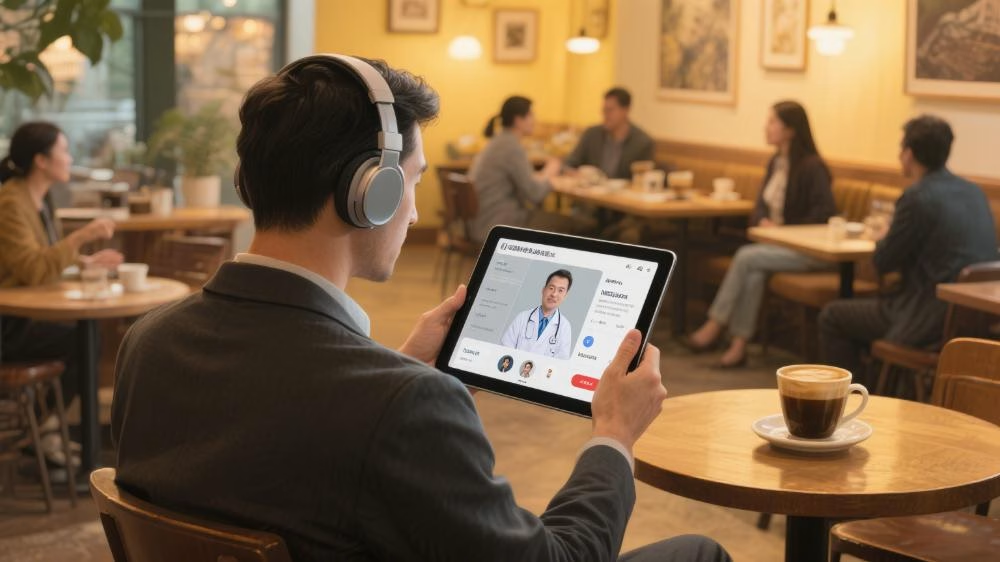
Have an online consultation first. Then book flights to major Chinese cities and arrange accommodation in advance, arriving a few days before surgery.
During the Surgery Period
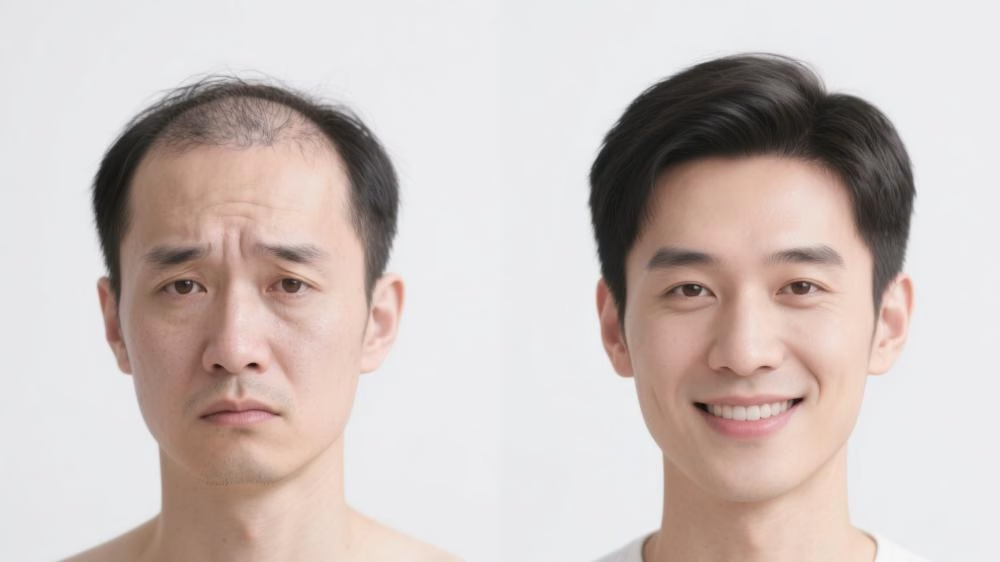
Follow the hospital schedule on surgery day. Recovery times vary: FUE takes about a week, while FUT can take several weeks.
Post – Surgery Sightseeing (Optional)
If well enough, explore local attractions like the Great Wall in Beijing or the Oriental Pearl Tower in Shanghai, but prioritize recovery.
Buffer Time
It is advisable to plan an additional 3 – 5 days as buffer time to account for any unexpected delays, such as flight cancellations, surgical complications, or slower recovery than anticipated.
Logistics Arrangements
Book your flight tickets and arrange accommodation in China preferably near the hospital or clinic to facilitate easy access for treatments and follow – up appointments. Also, plan any sightseeing activities you wish to do during your stay in China, but keep in mind that you should avoid strenuous activities and excessive sun exposure during the initial recovery period after the surgery.
Sample Schedule (FUE Procedure)
| Day | Activity | Key Notes |
|---|---|---|
| – 28 | Virtual consultation | Send scalp photos & medical history |
| – 7 | Book flights + hotel | Choose hospital – affiliated accommodation |
| 1 | Arrival in China; pre – op tests | Blood work, scalp analysis |
| 2 | Surgery (4–8 hours) | Local anesthesia; no overnight stay needed |
| 3–5 | Local recovery | Avoid sweating/sun exposure; sleep at 45° |
| 7 | Suture removal + discharge | Receive post – op kit (meds, shampoo) |
Note: FUT patients require 7 – 14 days for scar management.
5. The Surgery: What to Expect

Procedure Comparison
| Type | Description | Duration | Recovery | Best For |
|---|---|---|---|---|
| FUE | Minimally invasive, short recovery, leaves small scars | 4–8 hrs | 7 days | Small/medium bald areas; short hairstyles |
| FUT | Suitable for large – scale transplants, longer recovery, linear scar | 2–4 hrs | 14 days | Large – scale restoration; low donor density |
| Robotic | Precise and fast, reduces human error | 3–6 hrs | 5 days | Precision – focused patients; curved hairlines |
Surgery Day Flow
- Pre – Op: Scalp mapping + local anesthesia.
- Graft Harvesting:
- FUE: Punch extraction (0.8–1.0mm tools).
- FUT: Strip removal with trichophytic closure.
- Implantation: Follicles placed at 40–45° angles for natural growth.
6. Post – Op Care
Medical Guidance
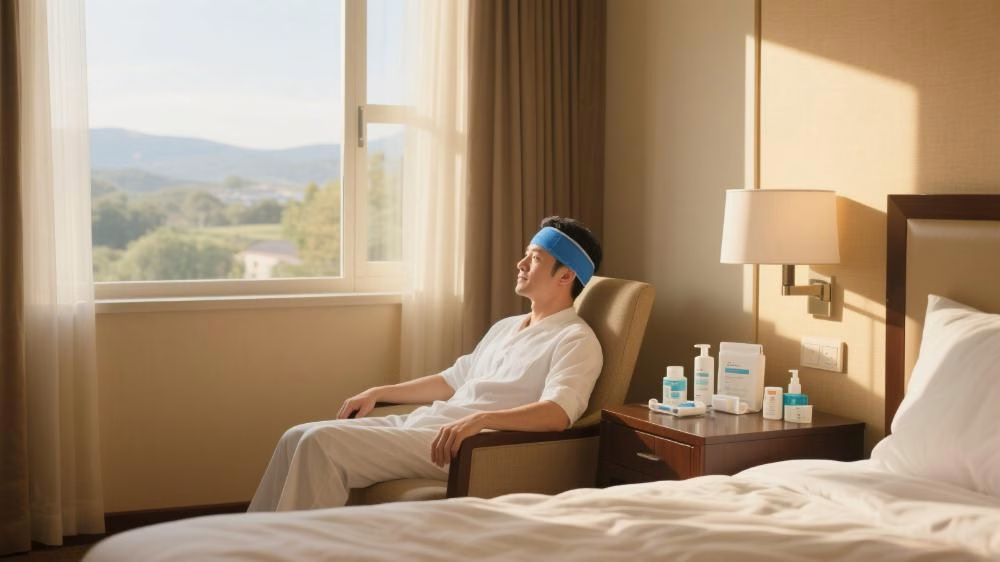
Strictly adhere to the surgeon’s post – op care instructions, including proper wound care, regular medication intake, and adherence to activity restrictions. Attend all scheduled follow – up appointments, usually at 1 week, 1 month, 3 months, and 6 months post – surgery, to monitor the recovery progress, assess the growth of the transplanted hair, and make any necessary adjustments to the treatment or care plan.
Key Tips
- Avoid alcohol, smoking, strenuous exercise, and excessive sunlight exposure for at least 2 – 4 weeks after the surgery.
- Do not take flights longer than 4 hours for 2 weeks post – surgery, as changes in air pressure may affect the healing process of the scalp.
- Use recommended skincare products for the scalp and wear appropriate headwear to protect the treated area from external damage and UV radiation if necessary.
- Follow a healthy diet rich in protein, vitamins, and minerals to support hair growth and overall recovery.
Emergency Support
Save the hospital’s emergency contact number and your country’s embassy or consulate phone number in case of any emergencies or urgent situations during your stay in China. It is also advisable to have a local contact or translator available to assist you in communicating with medical staff or dealing with any other issues that may arise.
Critical Recovery Phases
| Timeline | Action Plan | Risks to Avoid |
|---|---|---|
| Day 1–3 | • Sleep at 45° angle • Spray saline hourly | Touching grafts; hats/pillows |
| Day 4–10 | • Gentle shampooing (Day 4) • Suture removal (Day 7–10) | Sun exposure; alcohol/smoking |
| Week 2–4 | • Resume light exercise • Start minoxidil (if prescribed) | Swimming; saunas/steam rooms |
| Month 3–12 | • New hair sprouts (Month 3) • Final results (Month 12) | Discontinuing follow – ups |
Tip: Use medical – grade hair fibers to conceal redness during early recovery.
7. Practical Tips
Language Support
While many top – tier hospitals and clinics in China have English – speaking staff members, language barriers may still exist during complex medical discussions or follow – up appointments. Bringing a translator or using translation apps may be helpful to ensure clear communication and understanding of the treatment process and post – op care instructions.
Payment Methods
- Credit cards (3% processing fee)
- Bank transfer (requires 5 – day advance)
- Avoid cash payments > $5,000
Insurance Note
“Hair transplants are rarely covered by insurance. Purchase travel medical insurance covering surgical complications – e.g., infection or excessive bleeding.”

– Dr. Zhang Li, Yonghe Hair Transplant
8. Cost Estimate
China’s hair transplant cost Estimate (3,000 FUE Grafts)
| Category | Cost Range | Inclusions |
|---|---|---|
| Surgery | $3,500 – $6,000 | Grafts, anesthesia, surgeon fees |
| Medications | $100 – $200 | Antibiotics, painkillers, special shampoo |
| Accommodation | $400 – $800 (7 nights) | Hospital partner hotels (3 – 4 star) |
| Post – operative Care | $500 – $1,000 | |
| TOTAL | $4,000 – $7,500 |
Cost Comparison with North America and the UK
In North America (the US and Canada), the average cost of a hair transplant is approximately $4,000 – $10,000 (≈ RMB 29,000 – ¥72,500), with some high – end clinics or specialized surgeons charging up to $15,000 – $20,000 (≈ RMB 108,500 – ¥144,500) or more. In the UK, the cost of hair transplant surgery typically ranges from £3,000 – £6,000 (≈ RMB 28,000 – ¥56,000), with prices varying based on the clinic’s reputation, location, and the complexity of the procedure. As can be seen, hair transplant surgery in China offers significant cost – saving opportunities for international patients compared to Western countries, without compromising on the quality of medical care and treatment outcomes.
With this guide, Hair Transplant in China for International Patients becomes a clear, accessible option—whether you’re seeking FUE surgery or exploring visa-free medical tourism.
If you have any questions about taking hair transplant in China or need customized medical tourism services, please feel free to contact us. Thank you!
Disclaimer:
This article provides general information about medical tourism for hair transplants in China. It is not intended as medical advice or a substitute for professional consultation. International patients should conduct independent verification of hospitals, surgeons, and procedures, and consult qualified healthcare providers before making treatment decisions. China Medical Tourism Guide assumes no liability for actions taken based on this content.
