
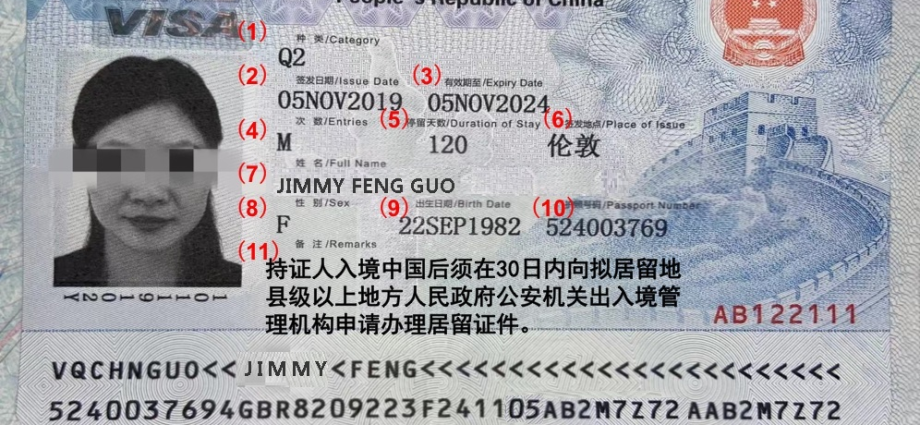
Learning how to read a Chinese visa is critical for medical travelers. This guide breaks down key details like visa type, validity, and entry rules to help international patients avoid delays and ensure smooth treatment in China.
Generally, foreign patients seeking medical treatment in China should obtain an L visa, an S2 visa, or an S1 visa (depending on the complexity of their medical conditions). With the increasingly liberal visa policies of China in recent years, citizens from an increasing number of countries can enter China visa-free. It is recommended that you select an appropriate visa type for entering China based on your own medical condition and visa situation.
Below is a brief introduction of a Chinese Visa:
(1) Visa
(2) Visa Category
(3) (7) Nationality of Visa Holder
(4) (5) Name of Visa Holder
(6) Passport Number
(8) Date of Birth of Visa Holder
(9) Gender of Visa Holder
(10) (13) Validity for Entry
(11) Visa Category
(12) Number of Entries Allowed
(14) Duration of Stay
(15) Date of Visa Issuance
(16) Place of Visa Issuance
(17) Name of Visa Holder
(18) Date of Birth of Visa Holder
(19) Passport Number
(20) Visa Number
(16) Explanation:
Medan* – Fingerprint has been collected at the Chinese Visa Application Service Center in Medan.
Medan or Medan** – Fingerprint has not been collected at the Chinese Visa Application Service Center in Medan.
Why Knowing How to Read a Chinese Visa Matters for Medical Patients
Avoiding Entry Delays for Treatment
Misinterpreting visa details can lead to entry denials or delays at Chinese ports of entry, which directly disrupts scheduled medical procedures. For international patients, even a short delay can mean missed appointments, wasted travel costs, and compromised treatment outcomes. By understanding your visa, you can ensure a smooth arrival and focus on your health.
Understanding Visa Validity for Extended Medical Stays
Many medical treatments in China require multiple sessions or extended recovery periods. If you misread your visa’s validity or stay duration, you may overstay your visa, resulting in fines, deportation, or being barred from future entry. Clear comprehension of these terms is essential for planning long-term medical care without legal risks.
Key Components of a Chinese Visa (How to Read Each Section)
1. Visa Type & Purpose (Medical vs. Tourist)
Your visa type determines your legal purpose in China. A tourist visa (L visa) does not permit medical treatment, and using it for this purpose is illegal. Medical travelers must obtain the appropriate visa, such as an M visa, to ensure compliance with Chinese immigration laws.
2. Validity Period & Number of Entries
The validity period is the window during which you can enter China, not how long you can stay. The number of entries (e.g., “01”, “M”) indicates how many times you can enter the country within that validity. For patients requiring follow-up visits, a multiple-entry visa is often necessary.
3. Duration of Each Stay
This is the maximum number of days you are allowed to remain in China per entry. It is crucial to plan your treatment and travel within this limit to avoid overstaying. If your treatment requires a longer stay, you must apply for an extension before the current stay expires.
4. Issuing Port & Expiry Date
The issuing port is where your visa was processed, while the expiry date marks the end of the visa’s validity. Always check the expiry date to ensure you enter China before it expires, and remember that this date is separate from your allowed duration of stay.
Medical Visa Types & Visa-Free Entry Updates
M Visa for Medical Treatment
The M visa is specifically for individuals traveling to China for medical treatment. It requires supporting documentation, such as a letter of invitation from a Chinese hospital and proof of medical necessity. This visa type ensures you are legally permitted to receive treatment in the country.
Recent Visa-Free Entry Policies for Medical Patients
China has updated its visa-free entry policies for certain nationalities and purposes. However, these policies typically do not cover medical treatment. Patients should confirm whether their nationality and treatment type qualify for visa-free entry, and if not, apply for the appropriate medical visa in advance.
Visa Fingerprint Collection Requirements (Medan & Other Ports)
Most foreign nationals are required to provide biometric data, including fingerprints, when applying for a Chinese visa. This process is also mandatory at ports of entry like Medan. Failure to complete this step can result in entry denial, so patients should arrive early to allow sufficient time for processing.
Common Mistakes When Reading a Chinese Visa
Confusing Validity with Duration of Stay
A common error is mistaking the visa’s validity period for the allowed duration of stay. Remember: validity is when you can enter, and duration is how long you can stay. Overstaying even by one day can have serious legal consequences.
Missing Entry/Exit Stamp Requirements
Upon entry and exit, Chinese immigration officials will stamp your passport. These stamps are proof of your legal entry and exit dates. Losing or missing these stamps can lead to complications when applying for future visas or during exit checks.
FAQ for Medical Travelers Reading a Chinese Visa
What do the codes on my Chinese visa mean?
Codes on your visa represent the type, number of entries, and duration of stay. For example, “M” indicates a medical visa, “01” means single entry, and “30” denotes a 30-day stay per entry.
Can I extend my visa for medical treatment?
Yes, you can apply for a visa extension at the local Exit and Entry Administration Bureau in China. You will need to provide a medical certificate from your treating hospital explaining the need for an extended stay.
Do I need a separate visa for follow-up appointments?
If your initial visa is multiple-entry, you can use it for follow-up visits within the validity period. If it is single-entry, you will need to apply for a new visa or an extension before returning for treatment.
Additional Resources:
- How to get a China medical visa (M visa) for international patients: A Step-by-Step Application Guide
- A Comprehensive China’s Visa Application Guide: What kind of visa should I need for medical tourism in China?
- What Types of Diseases Are Suitable for Treatment in China for international patients? -MedChina Guide
- Why Choose China for Medical Treatment for international medical seekers? | China Medical Tourism – MedChina Guide
- Chinese Government visa policy: All about Chinese Visa
